What is in the room, in plain words.
Non-invasive: no needles, nothing implanted, nothing that stays with you when you leave. Clarity over claims. Nothing here is in the practice because it's new. It's here because it moves you into a mode you can feel, in the time you have. Four things do that: three tools, and your breath.
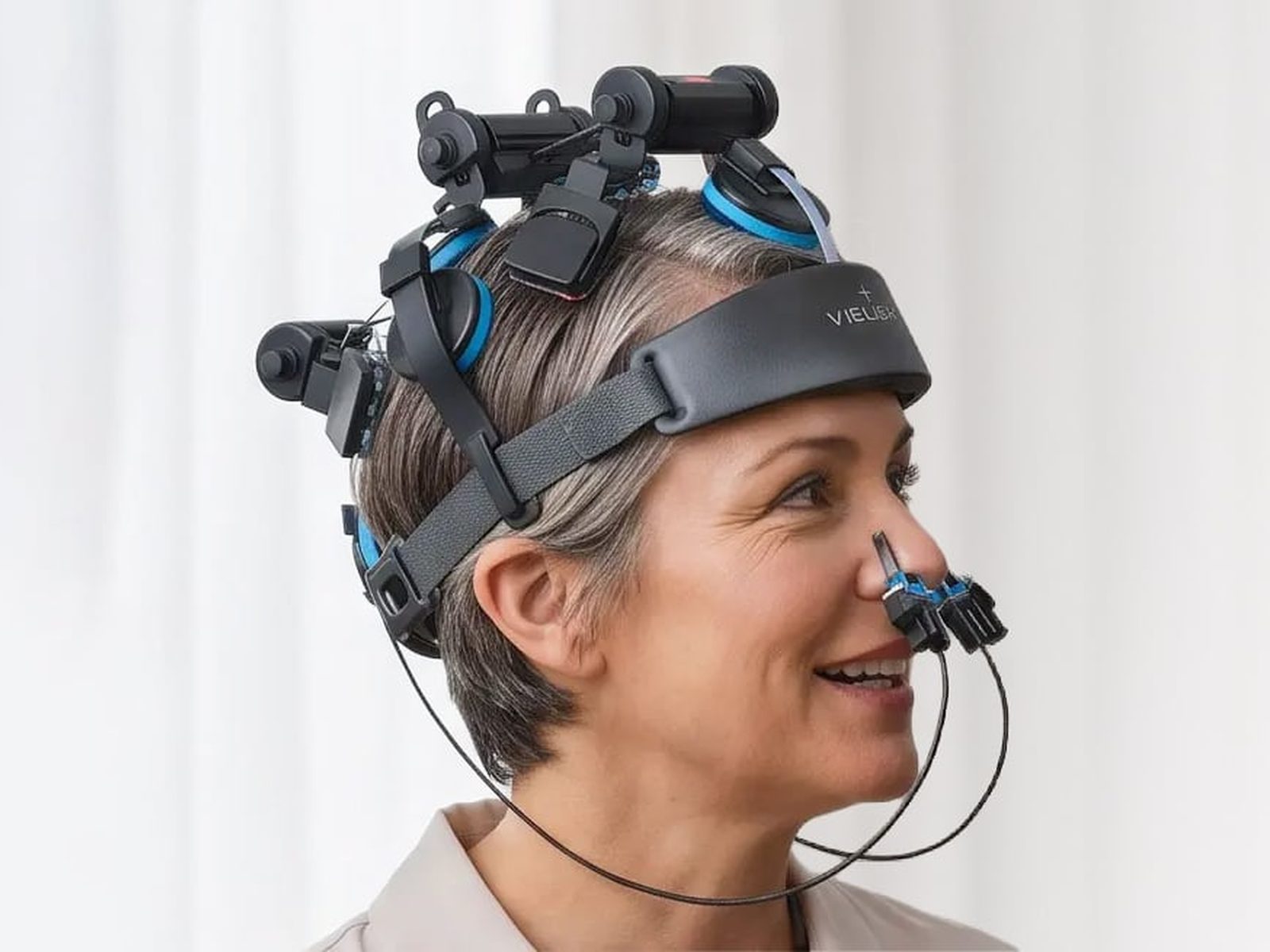
Vielight
- What it is
- A soft headset, nothing sharp, nothing invasive. Light diodes on the scalp and a small applicator in the nose, sending near-infrared light to the brain. Forty pulses a second for the sharp mode, ten for the calm one.
- What you feel
- Nothing while it runs. A settled clarity after.
- Used in
- FocusClear
- In plain words
- Light at this wavelength is picked up by the same cellular structures that make your energy, the mitochondria, and near-infrared light asks them for more. It is the same idea as red light therapy for skin, aimed at the brain instead.
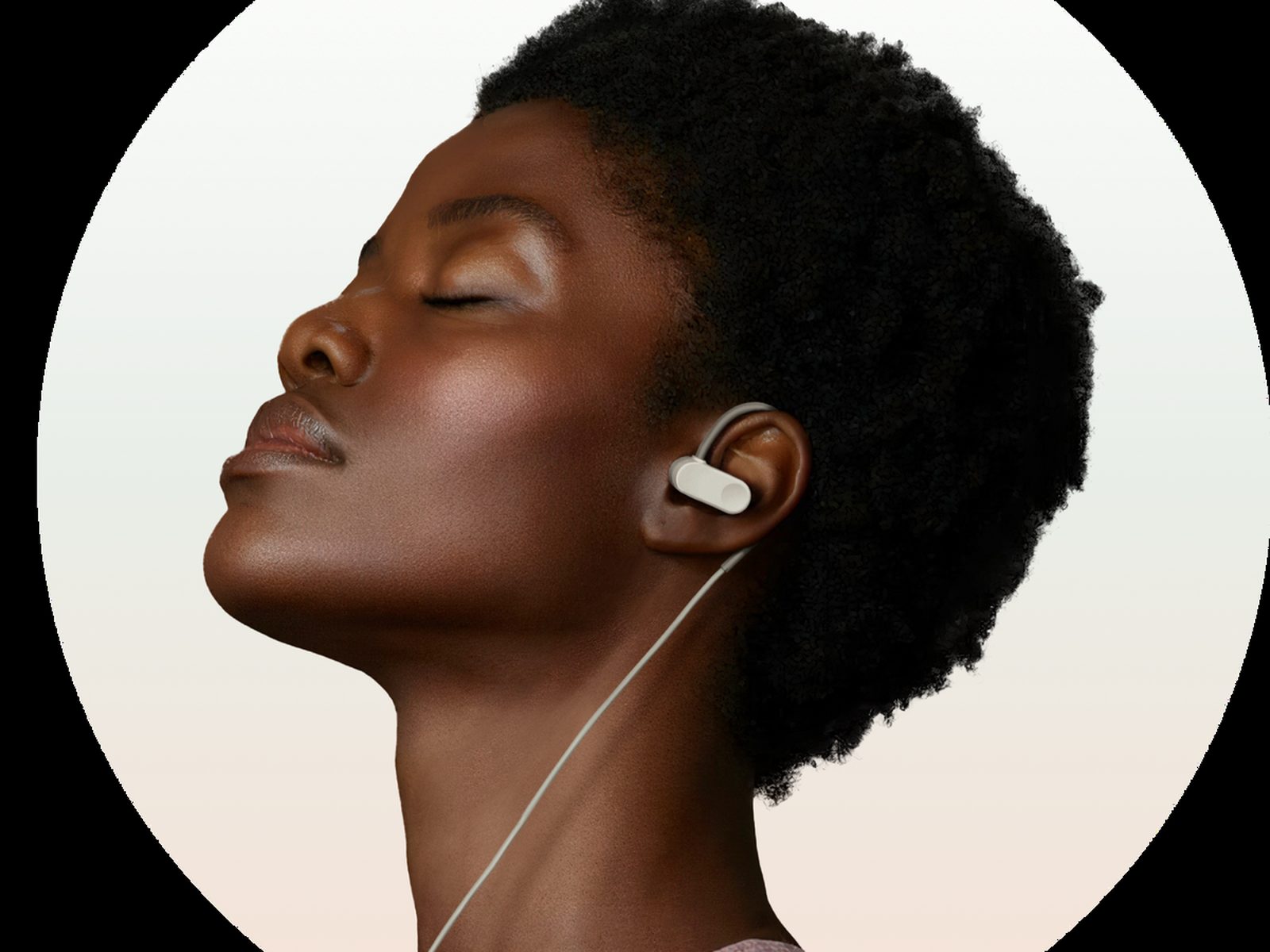
Nurosym
- What it is
- A small clip on the ear, no needle. It sends a gentle current to a branch of the vagus nerve, the nerve that tells your body it's safe to slow down.
- What you feel
- A light tingle at the ear, then the shoulders drop.
- Used in
- SleepCalmConnection
- In plain words
- Most of the day, this nerve gets one instruction, stay alert, stay ready. Nurosym gives it a different one for twenty minutes, and your heart rate follows.
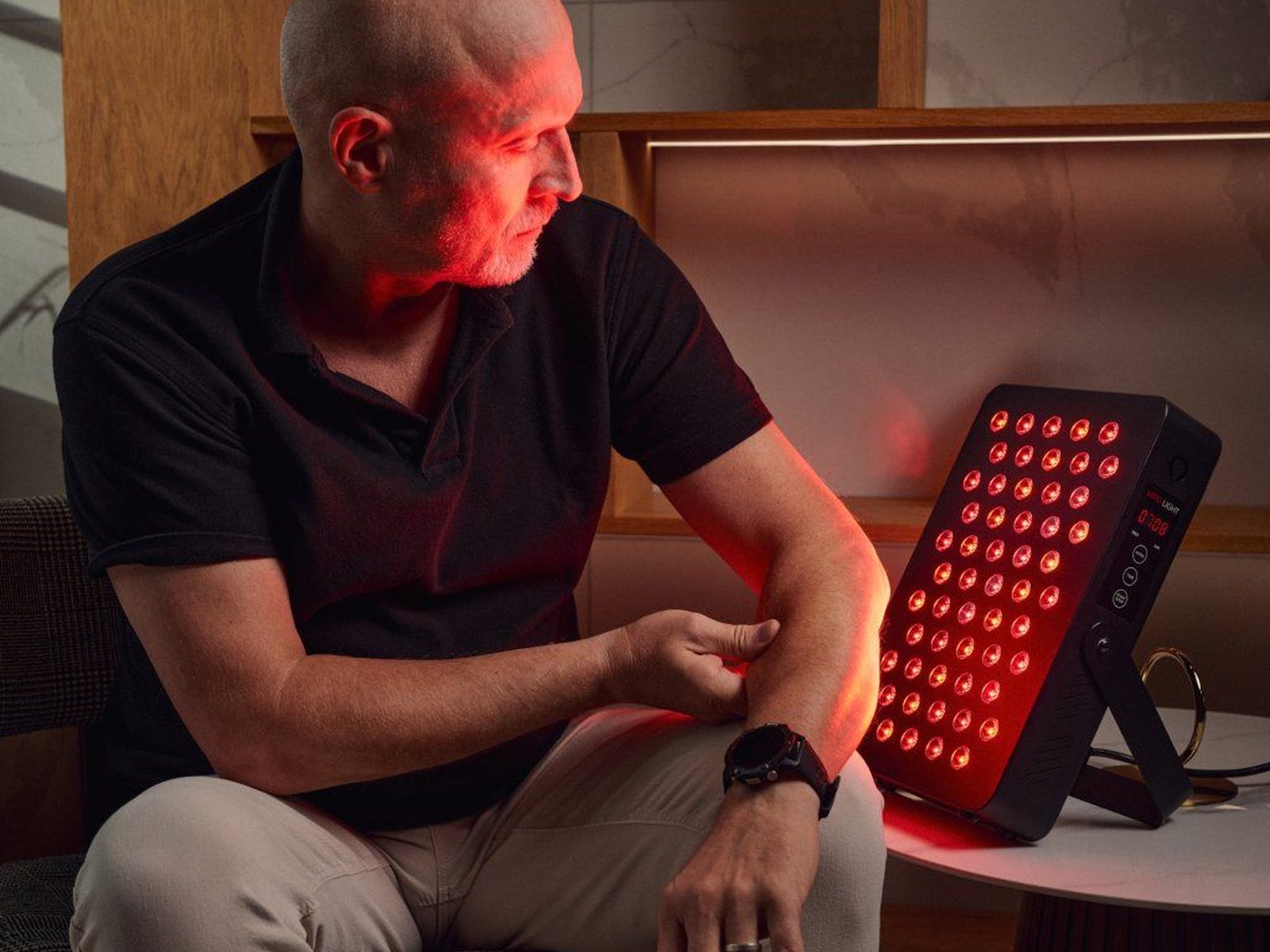
Mito Light
- What it is
- A panel of red and near-infrared light. No headset, no clip, just light on skin.
- What you feel
- Warmth, brightness, then a lift that lasts the afternoon.
- Used in
- Energy
- In plain words
- The same wavelengths the Vielight sends to the brain, this time across the body, absorbed just under the skin, which is why it is the session people feel fastest.

Breathwork
- What it is
- The oldest technology in the room. No battery, no app, the one tool that is always on you.
- What you feel
- A different mode, a few breaths later.
- Used in
- FocusClearEnergySleepPresenceCalmConnectionGround
- In plain words
- How you breathe changes your heart rate in real time. That is not a claim, it is the number moving on the screen while you do it.
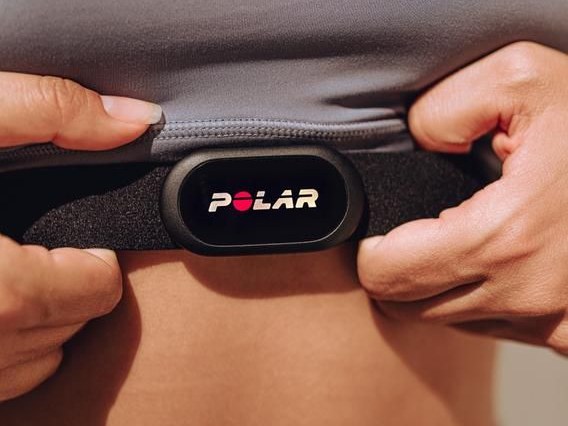
Polar H10
- What it is
- A chest strap that reads the electrical signal of every heartbeat, the way a hospital ECG does. The strap athletes and researchers trust for heart rate variability.
- What you feel
- Nothing. A soft strap under your shirt.
- Used in
- FocusClearEnergySleepPresenceCalmConnectionGround
- In plain words
- Rings and watches estimate your heart from blood flow, using light. The strap reads the heart itself, so the number on the screen is the real one. It's how we show the other tools work: your numbers, not our opinion.
None of these four work alone. Rebeca times a specific combination for each mode: how many minutes on which tool, in what order, with what kind of breath. That combination is the protocol. You book the session.
Who designed it
Every protocol is designed by Rebeca Sanz Barriuso, neuroscientist, cofounder. Her research background is heart rate variability: what it measures, what moves it, and what does not. Every sequence, timing and number you see is hers, and she runs many of the Recharge Plans herself.
We run every protocol on ourselves before it goes on the menu. If we cannot feel it, you will not be asked to pay for it.

Between every session: fresh covers on the mat, every surface wiped, headsets sanitised. Members keep their own Vielight nose applicator, nobody shares. Your Recharge Plan and the two-minute form tell us which stations to adapt if you have epilepsy, an implanted device, or you are pregnant.
This is not a clinic. None of this diagnoses or treats a condition, and we will never tell you it does. It is technology for moving between modes, run by people who use it every day.